
One Year Later
By Katie Gaughan
The Redhawk Post interviewed La Roche University President Dr. Christina Clark the morning of April 10th. The Post inquired about Dr. Clark’s impression of her first year as president, as well as what La Roche has to look forward to next academic year.
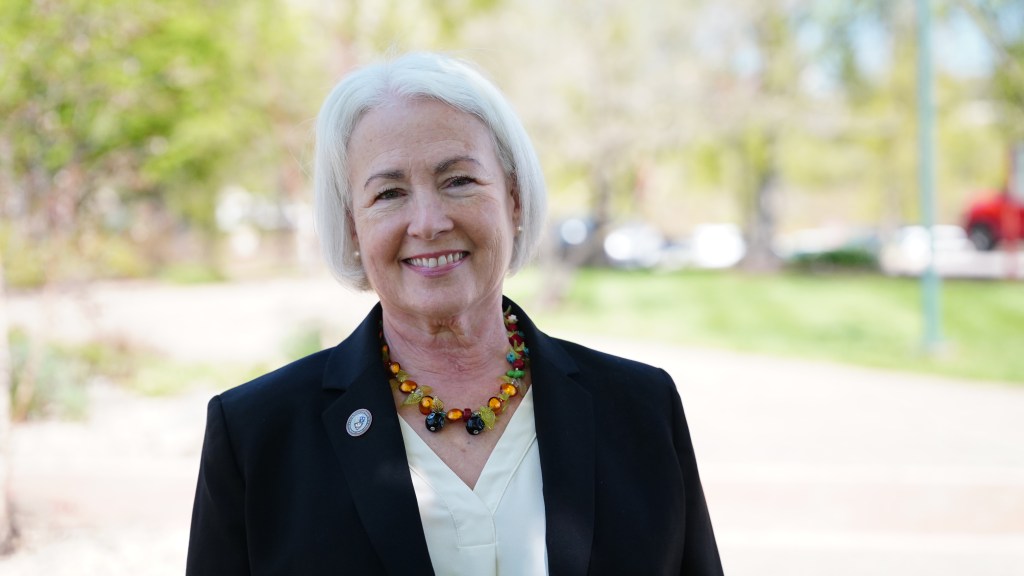
Dr. Christina Clark
Photo by LRU Marketing and Media
Q: Could you, in 100 words or less tell me about how your first year as the president of La Roche University is going?
I think it’s going well. My goals for the year were to get to know people on campus, to understand people’s points of view, and the history of La Roche, of our processes, and of our evolution from a college to a university. I have spent a lot of time building relationships, building trust, and trying to understand other people’s perspectives.
I’ve also spent time developing my own perspective on how we can move forward so that La Roche continues to thrive in this time of great societal and economic change. I have been doing listen-and-learn sessions over the course of this year and just finished the last one. I’ve met with every unit on campus, asking them what they felt I should know as the new president.
Q: What have you liked most about your new position, and what has been the most challenging thing you’ve encountered?
I enjoy getting up every day and coming into work because of the people here. I think the culture is very special, the people here are very dedicated, and everyone cares about each other and the university. We have a unique culture of care for each other and for students that I’ve not experienced in the same way at other institutions.
Higher education is experiencing a lot of challenges in terms of the dropping numbers of traditional college age students. The rapid technological change is something that is hard to keep up with in terms of technology that we need to ensure students know how to use, as well as keeping up with the federal actions that affect higher education and higher education’s funding.
Another federal action under consideration is expanding the endowment tax, where it seems that some of our elected representatives don’t realize that the endowment universities have is not just a big bank where you can get money to do things. A lot of that endowment is restricted. It’s money from donors that they say want to go to student scholarships or other things, so we can’t go in and take that money and use it for something else.
Also challenging are the different federal actions around international students, who make up almost 20 percent of our student body, and are a core part of our mission and our core values. Also, the rise of utilities and other prices because of tariffs really affects the university and the university budget.
Q: What is your favorite thing about La Roche?
It’s the people. I think that all comes down to our founders, the Sisters of Divine Providence, and their core values. I think those are what set La Roche up to be what it is, our culture of care. I always look forward to coming to work because the people are just wonderful to work with.
Q: What have you found most surprising about your first year living in Pittsburgh and working at La Roche?
Well, living in Pittsburgh, it’s very funny because I’d never been to Pittsburgh before I came for my finalist interview. People were telling me, we haven’t had much snow here in about ten years and the winters have been pretty warm. Then, this winter happened with so much snow and the spring, with so much rain! I am very experienced in driving in snow, but snow in Wisconsin, Nebraska, and Minnesota, where it’s flat. And so, driving on the hills of Pittsburgh with that kind of snow and ice, I don’t have those skills. That has been something that I learned that’s been interesting.
Q: In our last interview, you had not yet relocated to Pittsburgh. What do you like most about living here?
Several things. I think the natural beauty is there, especially in the rivers. I had no idea that Pittsburgh was so pretty. It’s beautiful. I like the fact that you can get in and out of Pittsburgh easily. I’ve lived in places where it took hours to get to an airport or somewhere, or to have a different experience. Pittsburgh, I think, has so much to offer in that way. The natural beauty is wonderful.
Q: Your presence among the student body is evident and does not go unnoticed. You make an effort to attend student-led and organized events. What is at least one thing you have learned about the student body from your time spent among them?
The student body here is very nice, and seems to be kind and inclusive. I’ve been talking to different types of students, our ESL students, and I’m a conversation partner for one, and different groups like SGA. They seem concerned about one another and concerned about faculty, and faculty are concerned about students.
We’re running a search for a new vice president of academic affairs and dean of the faculty. And so, our search firm consultants were interviewing campus groups to get their opinions on what they want to see in this new person. At the end of the day, they took me aside and said they were so impressed. This was so different from other searches they’ve run because in a meeting with the faculty, the faculty emphasized that we need a new VPAA who really understands and cares about our students. In the next session, it’s the students who were saying, we really need a new VPAA who really cares about the faculty.
They said that was really striking. I think that the students are very focused on their studies. They’re busy. They’re athletes, they’re students, they’re working jobs, they’re doing internships, they’re volunteering in the community, and they’re helping at home. Our students are very busy, but they’re still part of that culture of care that we have here. I’ve been very impressed by them. I haven’t been able to attend as many sports games as I wanted to, but at every single one of them, soccer, basketball, and others, I’ve been impressed by the fact that our teams don’t give up. They’re all out, all in, and I think that’s so admirable. I’ve just been impressed with our students because it’s a very complicated time we live in.
Q: During your second year as president, would you do or approach anything differently than in your first year? What has this year taught you and how do you plan to apply to your next? What’s next?
We are going to start future planning. As I said before, we’re closing out our current strategic plan, and we will report at the October board meeting everything that we accomplished from the strategic plan that is finishing. Next year, I would like to kick off preparations for planning a “sprint” strategic plan. In fundraising, there is something called a “sprint campaign.” Instead of a comprehensive campaign that could be a five to ten-year campaign for a variety of initiatives that we want to raise money for, a sprint campaign focuses on one or two things for a short period of time.
So, a “sprint” strategic plan, limited to one or two pages, would focus on a few important initiatives to be achieved over one to two years, linked to the university budget process. I want to make sure that students have what they need in these changing times. I mean, who knows in two years what technological skills students will need to have. So, technology will be part of our strategic plan.
 The Redhawk Post